In today’s globalized food industry, ensuring the safety of food products is not only a matter of consumer trust but also a legal obligation for organizations. The ISO 22000 standard serves as a critical tool in helping businesses navigate the complex landscape of legal requirements related to food safety management.

What is the ISO 22000 standard for food safety management?
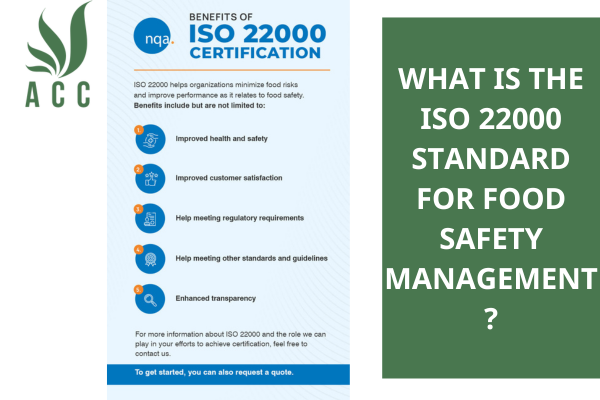
The ISO 22000 standard is an internationally recognized framework for food safety management systems (FSMS). It outlines the requirements for organizations involved in the food industry to establish, implement, maintain, and continually improve an effective FSMS.
Key aspects of the ISO 22000 standard include:
- Hazard Analysis: Identification and assessment of potential food safety hazards throughout the food production process.
- Prerequisite Programs (PRPs): Implementation of prerequisite programs such as Good Manufacturing Practices (GMP), sanitation, and pest control to create a hygienic environment for food production.
- Hazard Analysis and Critical Control Points (HACCP): Application of HACCP principles to identify critical control points in the food production process and implement control measures to prevent or reduce hazards to acceptable levels.
- Management System Requirements: Establishment of a comprehensive food safety management system, including documentation, procedures, and controls to ensure compliance with food safety requirements.
- Communication: Effective communication with suppliers, customers, regulatory authorities, and other relevant parties to ensure food safety requirements are understood and addressed.
ISO 22000 is applicable to all types of organizations involved in the food chain, including primary producers, food manufacturers, distributors, retailers, and food service providers. It provides a flexible framework that can be tailored to suit the specific needs and circumstances of each organization, helping to ensure the safety and quality of food products throughout the supply chain.

The requirements for ISO 22000, as outlined in the standard “ISO 22000:2018 – Food safety management systems – Requirements,” include the following key elements:
- Context of the Organization: Organizations are required to determine the internal and external factors that may affect their ability to achieve food safety objectives. This includes understanding the needs and expectations of interested parties.
- Leadership: Top management must demonstrate leadership and commitment to the development, implementation, and continual improvement of the FSMS. This includes establishing a food safety policy and ensuring that responsibilities and authorities are defined.
- Planning: Organizations must plan and develop the FSMS, taking into account the requirements of interested parties, the scope of the system, and the processes needed to achieve food safety objectives.
- Support: Resources, including personnel, infrastructure, and communication systems, must be provided to ensure the effective operation of the FSMS. This also includes ensuring competence, awareness, and communication among employees.
- Operation: This section covers the implementation of the FSMS, including the development and implementation of operational controls, prerequisite programs, and monitoring activities to ensure food safety.
- Performance Evaluation: Organizations are required to monitor, measure, analyze, and evaluate the performance of the FSMS. This includes conducting internal audits, managing nonconformities, and continually improving the effectiveness of the system.
- Improvement: Continual improvement is emphasized, with organizations required to take corrective actions to address nonconformities and prevent their recurrence. Additionally, opportunities for improvement must be identified and pursued.
These requirements provide a structured framework for organizations to establish and maintain an effective food safety management system that meets the needs of customers, regulatory authorities, and other interested parties. Compliance with these requirements helps to ensure the safety and quality of food products throughout the supply chain.
What is the food safety policy as per ISO 22000?
The food safety policy, as per ISO 22000, is a documented statement by top management that outlines the organization’s commitment to ensuring food safety. It serves as a guiding principle for establishing, implementing, and maintaining the food safety management system (FSMS). The food safety policy typically includes the following key elements:
- Commitment to Food Safety: A clear statement of the organization’s commitment to ensuring the safety of food products throughout the supply chain.
- Compliance with Applicable Requirements: A commitment to complying with relevant legal and regulatory requirements related to food safety.
- Continuous Improvement: A pledge to continually improve the effectiveness of the FSMS through regular review, assessment, and enhancement of food safety practices.
- Communication and Awareness: A commitment to communicating the importance of food safety to all employees and stakeholders and ensuring that they are aware of their responsibilities in maintaining food safety.
- Customer Focus: A commitment to meeting customer requirements and expectations related to food safety and quality.
- Resource Allocation: A commitment to providing the necessary resources, including personnel, infrastructure, and training, to support the effective implementation of the FSMS.
Overall, the food safety policy reflects the organization’s dedication to upholding the highest standards of food safety and quality and serves as a foundation for building a culture of food safety throughout the organization.
In conclusion, ISO 22000 stands as a vital tool for organizations in navigating the complex landscape of legal requirements governing food safety management. By providing a comprehensive framework for identifying, assessing, and addressing legal obligations, this standard equips businesses with the necessary tools to ensure compliance and uphold the safety and quality of their food products.
Xem thêm: ISO 22000:2018 – Food safety management
Xem thêm: History of ISO 22000
Để lại một bình luận